

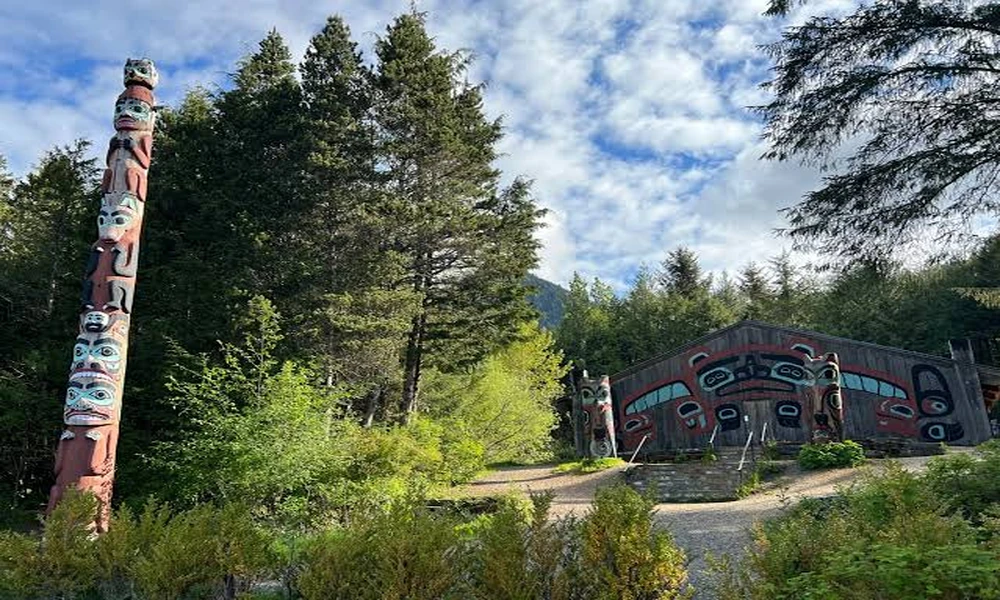
Long before Alaska was a U.S. state, or a Russian territory, or a destination on anyone’s travel list, it was – and still is – home to distinct Indigenous cultures with their own languages, art forms, and oral histories stretching back thousands of years. Tlingit, Haida, Tsimshian, Yup’ik, Iñupiat, and Alutiiq peoples, among others, each developed traditions shaped by the specific landscapes they lived alongside, from coastal rainforests to Arctic tundra. For travelers who want their trip to include more than scenery, learning even a little about this living heritage adds a dimension most itineraries skip entirely.
Totem Poles: Art, Not Artifact
One of the most common misconceptions visitors bring to Alaska is that totem poles are ancient religious idols. In reality, they’re closer to visual literature – carved records of family lineage, historical events, or notable stories, created by specific Northwest Coast peoples including the Tlingit and Haida. Each figure carved into a pole has meaning, often representing clan crests like the raven, eagle, or bear, stacked in an order that tells a specific story to those who know how to read it. Totem poles are also a living art form, not a relic of the past – contemporary carvers continue to create new poles for communities, ceremonies, and public spaces today.
Sitka National Historical Park houses one of the largest collections of original and restored totem poles in the state, set along a wooded coastal trail that lets visitors experience them in something closer to their intended context, rather than as isolated museum pieces.
Storytelling as Living History
Long before written records, oral storytelling carried the history, values, and survival knowledge of Alaska Native cultures across generations. These weren’t casual tales – many stories encoded specific ecological knowledge, like when and where to fish or how to read weather patterns, alongside cultural teachings about respect, community, and the relationship between people and the land. Many Native cultural centers now feature storytelling performances, giving visitors rare access to traditions that were historically passed down within families and communities rather than performed publicly.
Cultural Centers Worth the Detour
Alaska Native Heritage Center, Anchorage – This is the most comprehensive single stop for understanding the state’s Indigenous diversity, featuring life-size traditional dwellings representing different regional cultures, dance performances, and artisan demonstrations. It’s an ideal starting point for travelers who want context before visiting more specific regional sites.
Sealaska Heritage Institute, Juneau – Focused on Tlingit, Haida, and Tsimshian cultures, this institute runs the Walter Soboleff Building, which includes both a public gallery and rotating exhibits of contemporary Native art. It’s a good example of how Southeast Alaska’s Indigenous cultures are actively evolving, not preserved in amber.
Haida Heritage Center, Hydaburg and Kasaan – Though based primarily in Canada’s Haida Gwaii, Haida culture also has a strong presence in Southeast Alaska, with active carving programs and clan house restorations in small communities that welcome visitors interested in seeing traditional architecture still in use.
Alutiiq Museum, Kodiak – This center focuses on the Alutiiq people of the Kodiak Archipelago, with exhibits on subsistence practices, archaeology, and traditional skin-sewing techniques that reflect a culture shaped specifically by life on the water.
Approaching Native Culture Respectfully
The most meaningful way to engage with Alaska Native heritage is through spaces run or co-run by Native communities themselves, rather than secondhand retellings. Cultural centers, tribally owned tour operators, and Native-run galleries put resources directly back into the communities preserving these traditions, and they tend to offer far more accurate context than generic sightseeing stops. It’s worth seeking these out specifically rather than assuming any totem pole photo-op or gift shop offers the same depth.
Fitting This Into a Broader Trip
Because many of Alaska’s most significant Native cultural sites are spread across different coastal communities – Sitka, Juneau, Kodiak, and beyond – seeing more than one in a single trip usually means covering real distance along the coastline. This is part of why Alaskan cruises work well for travelers interested in this kind of cultural itinerary: stops in towns like Sitka and Juneau make it possible to visit multiple heritage sites without the added complexity of chartering flights between remote communities.
For a deeper, community-sourced look at contemporary Native life and culture across the state, ongoing reporting from Alaska Native communities offers context that goes well beyond what a single visit can provide.
A Culture Still Being Written
What makes Alaska’s Native heritage worth exploring isn’t just its depth – it’s that it’s ongoing. Totem poles are still being carved, stories are still being told, and cultural centers are run by descendants of the people whose history they house, not by outside institutions preserving something already gone. Travelers who take the time to engage with that living culture, rather than treating it as a historical backdrop, tend to come away with a far richer understanding of the place they’ve traveled to see.